Showing posts with label jobs. Show all posts

Saturday

Compositor Job Role

Compositors work in most areas of animation and post production.
They are responsible for constructing the final image by combining layers of previously created material. Although it is primarily a 2D role within the 3D world of CGI and VFX (Visual Effects), Compositors need a thorough understanding of the CG process combined with relevant artistic skills.
In post production companies, some TDs (Technical Directors) may do their own compositing.
What is the job?
Compositors work at the end of the production process. They receive material from various sources which could include rendered computer animation, special effects, graphics, 2D animation, live action, static background plates, etc.
Their job is to creatively combine all the elements into the final image, ensuring that the established style of the project is respected and continuity is maintained.
To achieve this they enhance the lighting, match blacks and other colour levels, add grain where required, add motion blur (if appropriate), create convincing shadows and make sure levels combine together seamlessly, keying (see glossary), rotoscoping and creating mattes where necessary.
They work closely with Lighters and need to have technical knowledge of how 3D lighting works in order to understand the 'multi passes' that the lighters create. They also liaise closely with Render Wranglers to progress work through the department.
As this is the end of the production line, there can be occasions when it is necessary to work very long hours to catch up on a schedule. Compositors need to keep up to date with technological developments within their field.
Typical career routesCG Compositors are most likely to have entered the Compositing Department as Roto Artists and worked their way up. In other cases, people who have acquired an understanding of compositing in layers for 2D Animation, using programmes such as After Effects, Animo or Opus, may have the relevant experience.
There are several levels within the department; this job profile applies to a mid-level Compositor. With the appropriate talent and skills, Compositors can become Sequence Heads, Senior Compositors or Compositing Supervisors; the best Compositors can aim to become VFX Supervisors.
Essential knowledge and skills Compositors need the talent to make artistic judgements, the technical skills to take practical decisions and the ability to analyse and solve problems.
Key Skills include:
  • extensive knowledge of current compositing software such as Shake and After Effects;
  • knowledge of various other programmes including Photoshop;
  • understanding of 3D animation process, particularly Lighting;
  • a good eye for composition, colour, light and shadow;
  • good knowledge of keying process;
  • methodical and thorough approach to work, and attention to detail;
  • ability to communicate with colleagues and work as part of a team;
  • ability to take direction and willingness to address comments and make changes;
  • ability to work with a minimum of supervision;
  • ability to deliver on schedule, working under pressure if required;
  • respect for the procedures and requirements of a particular studio, production or pipeline;
  • Knowledge of the requirements of the relevant Health and Safety legislation and procedures
Training and qualifications
Compositors are likely to have gained a degree in an art-related subject, such as Animation, Design, Illustration, Painting, Drawing, Photography or Computer Animation.
However, by this level, a minimum of two years professional experience; showreels demonstrating artistic talent and technical skill; and good references are likely to be of more value than academic qualifications.
Whether they have received formal training or worked their way up, Compositors need a thorough knowledge of the relevant software currently in use by the industry. Depending on the production, this is most likely to be Shake or After Effects, but could also be Combustion or, possibly Inferno or Flame.
For people moving into Compositing from other departments, there are several Shake courses available and this training would probably be a basic requirement.

from Skillset

Thursday

Research

Visual Effects Supervisor
What does a visual effects supervisor's job involve?
Visual effects encompass everything in a film that cannot be captured on a single piece of film in the camera. It often falls under the umbrella of special effects. But technically special effects concerns live sequences that take place on a film set such as animatronics, pyrotechnics or wire-work.
Visual effects involve everything that is created as more than one element but will finally be put together in a digital environment. It often involves compositing together computer generated effects with live sequences that are filmed using blue/green screen techniques or miniatures.
A visual effects supervisor will usually be called onto a film during pre-production. I'll need to talk to the director and the production designer as concept art is being created and as a story board artist is laying out a movie so we can discuss the scope of what is needed and what effects we can do.
For example, they might want to shoot a scene in a studio of a set piece 15 stories high. But their studio might only be 30ft high and can only fit in a set a few stories high. In order to extend it, I need to know the exact dimensions of the set, and how the camera has moved around it, how it is lit, and what it is constructed of so I can fit the computer generated version on top.
I recently supervised the visual effects for the big budget film Sahara. My biggest sequence was of a solar energy plant in the middle of the desert which, of course, doesn't exist in real life. Little pieces of it were built in the desert so we could shoot close shots with no visual effects enhancement or extension. But the wider shots needed substantial visual effects extensions. My visual effects team and I went to Morocco with the main filming units to see make sure that wide shots were covered in a way that allowed us to extend them, and to take reference footage, stills and measurements.
Back in London, the background shots filmed in the desert were digitized by the post-production visual effects company, Cinesite, and the solar plant that we had designed and built digitally was animated and composted into the shots.
How would you recommend getting into the business?
A lot of people start as assistants at visual effects and post-production companies. They are very good places for getting the basic knowledge of the techniques. There really is no better way to learn than on the job.
It's a good time to get into the business. There is a huge market at the moment as more and more films are being made using digital techniques. In fact, there is more work at the moment than there are artists.
To get into the business, you need a good basic knowledge of camera equipment and techniques, film lab processes, compositing techniques and software. You need a good visual sense and a creative approach to telling a story. The rest is just experience.

Tuesday

Location Blog

I recently found this blog of film location scout, Nick Carr.

"For the past four years, I’ve worked as a New York City location scout finding locations for feature films. I’ve been pretty much everywhere, from the highest rooftops to the deepest subway tunnels, from abandoned ruins to zillion-dollar luxury penthouse apartments.
What always amazes me about New York is how much there is to see if you take the time to look. Every street has a hidden gem or two, and yet they go largely ignored by thousands of passersby daily who simply don’t have the time to pay attention.
As it happens, my entire job consists of paying attention, and I’ve started this blog to keep a record of what I see."

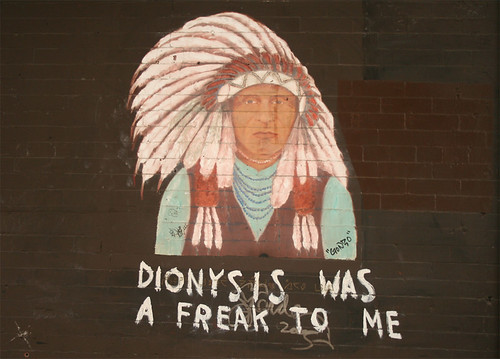
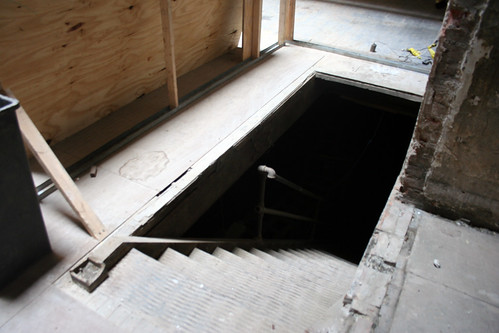
There are some amazing images on there, as well as stories about his own student days, I found it really interesting to read and it's definately inspired me to keep a look out for locations.

This story made me smile, I've never been to New York, but there's stuff like this everywhere and we know nothing about them.